For homeowners, buyers, and long-term residents in Indian River County, the Three Corners Project is not just a headline to scroll past. It represents a genuine shift in how the mainland side of Vero Beach could look, feel, and function over the next several years. The question most people are actually asking is not whether the project sounds impressive on paper, but whether it will meaningfully change the neighborhoods around it and what that means for real estate decisions happening right now.
The honest answer is that Three Corners has moved well past the concept stage. Rezoning has progressed, developer negotiations have taken place, and a public referendum already showed strong community backing. But the final financing structure and deal terms are still not fully resolved, which means the project sits in a real but incomplete phase of development. That distinction matters because it shapes how buyers, sellers, and investors should be thinking about the surrounding area, and this article connects those updates directly to neighborhood change, buyer psychology, and practical real estate decisions rather than just repeating project timelines.
What Readers Need to Know First About Three Corners
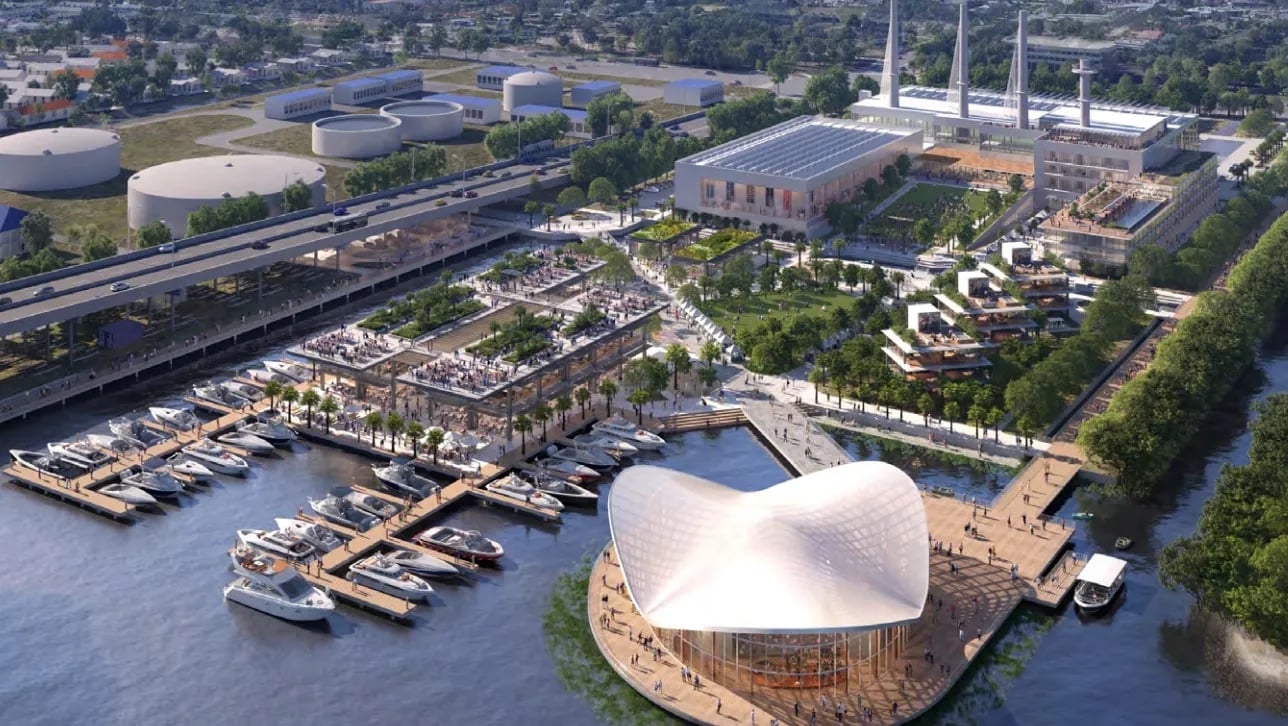
Three Corners covers roughly 38 acres of publicly owned waterfront land in Vero Beach, positioned near Indian River Boulevard and the 17th Street Bridge. The site includes three former utility parcels that the city has been working to repurpose for years, and the planned mix of uses is what makes this project relevant to real estate conversations across the county.
The current vision includes a hotel, marina, restaurants, retail shops, and public gathering space along the waterfront. That combination is significant because it is not just one amenity being added to the area. It is a layered destination that could draw people to the mainland riverfront consistently, not just occasionally.
Public support for the project has been unusually strong. In the 2022 referendum, nearly 80 percent of voters approved commercial development on the former power plant parcel, which is one of the three sites included in the broader plan. That level of approval is not common for a project of this scale, and it signals that the community has already decided it wants this kind of development to move forward.
What makes Three Corners different from a standard mixed-use proposal is the type of district it could create. Vero Beach currently lacks a mainland riverfront destination with this kind of density of activity. The barrier island has long been the draw for waterfront access, but Three Corners could shift some of that energy to the mainland in a way that changes how nearby neighborhoods are perceived and marketed. That is not a small thing for a county where waterfront proximity and lifestyle access are among the biggest drivers of property value and buyer interest.
Where the Project Stands Now and Why the Timeline Still Matters
The current status of Three Corners can be summarized as real progress with unresolved pieces still in play. The city went through a developer selection process, moved into formal negotiations, and has worked through zoning requirements. But a final development agreement has not been fully executed, and financing terms remain part of ongoing discussions.
What that means in practical terms is that the project is not stalled, but it is not fully locked in either. Extensions have been granted during the negotiation process, which is common for large public-private development deals, but it does add uncertainty to the timeline that buyers and sellers should factor into their thinking.
The timeline most people want to understand centers on when something will actually be built. Based on where negotiations have stood, discussions around an initial phase completing by the end of 2027 have been part of the broader conversation, with more complete development extending into 2028 and beyond. Those dates are targets, not guarantees, and anyone making real estate decisions based purely on a construction schedule is taking on more risk than necessary.
The more useful way to think about the timeline is through the lens of market psychology. Real estate markets often respond to expectation before they respond to physical change. When a major amenity project gains credibility through zoning approvals, public support, and active negotiations, buyer interest in surrounding areas can begin shifting even before a single shovel breaks ground. At the same time, unresolved deal terms tend to keep that shift measured rather than dramatic, which is actually useful for buyers who want to position themselves ahead of broader market movement without overpaying based on speculation.
The Neighborhoods Most Likely to Feel the First Ripple Effects
Downtown Vero Beach, the mainland waterfront corridor, Indian River Boulevard, and the stretch around the 17th Street Bridge are the areas closest to where the first wave of impact would be felt. These are not abstract geographic references. They represent specific neighborhoods and commercial corridors where the presence of a new waterfront destination would change the daily experience of living and doing business nearby.
Proximity to a marina, a dining district, and public waterfront access changes how a neighborhood gets described and marketed. A home that is currently listed as being close to downtown Vero Beach could eventually be positioned as walking distance from a riverfront destination district, and that language shift carries real weight with buyers who are prioritizing lifestyle access. The way a neighborhood is framed in a listing affects how buyers emotionally respond to it, which in turn affects what they are willing to pay.
The commercial corridors nearby stand to see a different kind of spillover. Boutique retail, cafes, marine-related services, and small professional offices often follow destination developments because the foot traffic and visibility make those locations more attractive. Indian River Boulevard in particular could see increased interest from businesses that want proximity to the activity that Three Corners would generate, and that commercial activity tends to reinforce residential desirability in surrounding blocks over time.
How Local Real Estate Could Change Before Prices Fully Do
Perception shifts faster than comparable sales data, and that gap is where some of the most interesting real estate dynamics happen. Indian River County's current market conditions add important context here. Inventory remains meaningful, homes are often selling below asking price, and buyers are still price-sensitive across most segments. That environment does not set the stage for an immediate price surge driven by the Three Corners announcement alone.
What it does create is the early conditions for what some analysts call a proximity premium, where buyer interest begins gravitating toward homes near lifestyle amenities before the pricing data fully reflects that preference. This kind of shift tends to show up first in how listings are written, how quickly certain properties receive inquiries, and what questions buyers are asking their agents, rather than in dramatic year-over-year appreciation figures.
The practical examples are worth thinking through. An investor evaluating a small commercial property near Indian River Boulevard might start weighing the Three Corners timeline as part of their hold strategy. A buyer choosing between two similarly priced homes might factor in which one is closer to the future waterfront district. A homeowner considering renovations might feel more confident in spending on improvements knowing that the neighborhood's long-term appeal is being supported by a major public investment nearby. None of these are guaranteed outcomes, but they reflect how real decisions get made when a credible project is in motion.
Why This May Be More About Placemaking Than a Quick Real Estate Boom
City leadership in Vero Beach has been clear that the Three Corners Project is not primarily designed to maximize tax revenue or generate rapid appreciation in surrounding property values. The stated goal is to create genuine public waterfront access and a stronger community gathering point on the mainland. That framing is worth taking seriously because it tells you something important about what kind of impact to expect and over what timeframe.
Placemaking projects, which focus on creating identity and livability rather than density or revenue, tend to produce slower but more durable changes in how communities are valued. The mainland side of Vero Beach has long played second fiddle to the barrier island in terms of waterfront identity. Three Corners, if it delivers on its vision, could gradually shift that perception by giving the mainland a destination that feels genuinely connected to the water and to the community.
That kind of change does not show up in a single quarter's sales data. It shows up over years as more buyers start considering the mainland as a lifestyle choice rather than just a more affordable alternative to the island. Long-term desirability and lifestyle appeal are quieter forces than a sudden price spike, but they tend to be more stable and more meaningful for residents who plan to stay in the area for a decade or more. For Indian River County, a county where community character and quality of life consistently rank as top reasons people choose to live here, that kind of identity shift carries real weight.
The Tradeoffs Nearby Residents Should Watch Closely
Not every effect of Three Corners will feel like a benefit to every resident near the site. Traffic increases along Indian River Boulevard and around the 17th Street Bridge are a reasonable concern, particularly during events or peak dining hours at a future waterfront venue. Parking demand, noise from a marina or outdoor gathering space, and the general activity level that comes with a destination development are all legitimate considerations for people who currently enjoy the quieter character of the surrounding area.
The city has already signaled awareness of these issues. Neighborhood protection strategies have been included in planning discussions, which suggests officials understand that the transition around the project site will require active management rather than just good intentions. That is a positive sign, but it also means residents should stay engaged with the details as they emerge.
Watching the specifics matters more than watching the headlines. Traffic studies, public access design decisions, event activity restrictions, buffering between the development and adjacent residential areas, and how public safety costs are allocated are all details that will determine whether Three Corners integrates well with surrounding neighborhoods or creates ongoing friction. A waterfront destination that is well-designed for its context can coexist with residential areas without degrading them. One that is not carefully managed can become a source of persistent tension that outweighs the benefits for the people living closest to it.
What Buyers, Homeowners, and Investors Can Do With This Information Now
Buyers comparing neighborhoods in Indian River County now have a concrete reason to factor future amenity access into their decision-making, not just current home features. A neighborhood near the Three Corners site may not look dramatically different from a comparable neighborhood further inland at the moment, but the trajectory of the two areas could diverge meaningfully over the next five to ten years depending on how the project unfolds.
Homeowners near the site should feel reasonably confident that the project supports the long-term marketing appeal of their properties, but that confidence should be tempered. Assuming a guaranteed short-term value spike based on a development that still has unresolved financing and agreement terms would be getting ahead of the actual situation. The stronger position is to treat Three Corners as a factor that improves your long-term outlook without changing what you should expect in the next twelve months.
Investors looking at the area have a different calculus. The most realistic near-term opportunities are likely in the gradual spillover effects on nearby commercial and mixed-use properties, particularly along corridors that would benefit from increased foot traffic and business activity. Waiting for the project to fully transform the market before acting means missing the window where positioning ahead of broader demand is still possible.
Grounding decisions in what is actually known, the project's genuine progress, the still-unresolved terms, the realistic timeline, and the measured but real potential for neighborhood change, leads to far more confident choices than either dismissing Three Corners as a distant possibility or treating it as a done deal with guaranteed returns.
Conclusion
Three Corners matters for Indian River County not because it promises an immediate real estate boom, but because it has the potential to shift neighborhood identity, buyer interest, and the way the mainland side of Vero Beach is perceived over time. That kind of influence starts before construction is complete, which is exactly why understanding the project now is more useful than waiting for the results to become obvious.
The balanced reality is that meaningful progress has been made, but patience remains necessary. Final terms are not settled, financing is still being worked through, and the timeline extends several years into the future. The early impact will most likely be felt as gradual changes in how nearby neighborhoods are valued and marketed, not as a sudden shift across the broader county market.
Anyone living near the project site, considering buying in the surrounding area, or watching for investment opportunities in Indian River County is better served by staying informed and thinking in terms of long-term positioning rather than short-term reaction. The ripple effects of Three Corners are already beginning to form, and recognizing them early is the most practical advantage available right now.
Check out this article next